Last Updated on May 2, 2026 by Bruno Bianchi
The phenomenon of occupied homes for sale in Spain continues to grow, with more than 23,000 such properties listed across the country as of September 2025. According to data published by Idealista, these properties—commonly referred to as viviendas okupadas—now represent about 3% of the total housing market for sale in Spain. This marks a concerning trend in Spanish real estate, particularly for property owners struggling to recover possession of their homes through the judicial system.
What Does “Occupied Home” Mean in Spain?
An “occupied home” (or vivienda okupada) refers to a property taken over without the owner’s consent. In many cases, these homes are seized by individuals or groups who remain there illegally, creating a long and complex legal battle for the rightful owner. The process of eviction can take months or even years, during which time the owner cannot sell or rent the property freely.
Planning your move to Spain?
Get the free step-by-step roadmap used by 10,000+ expats — covering visas, budget, housing, and the mistakes to avoid.
Start the Moving to Spain Hub →However, as the Idealista study reveals, more homeowners are now choosing to sell their properties while they are still occupied—often at heavily discounted prices, sometimes reaching up to 50% below market value.
A Widespread Problem Across Spain
The data shows that occupied homes for sale are no longer an isolated issue confined to major cities. They are spread across the country, affecting large and small markets alike.
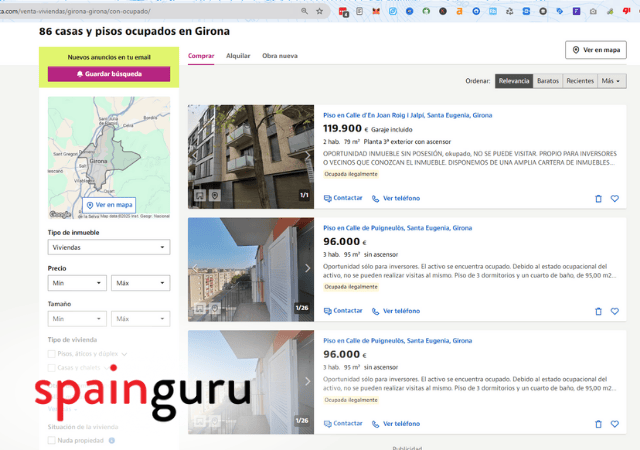
As of the third quarter of 2025, Idealista recorded 23,010 listings marked as “occupied.” Girona, Tarragona, and Sevilla are the three cities with the highest proportions of occupied properties for sale, with 8.9%, 8.8%, and 8.4% respectively. They are followed by Almería (6.4%) and Murcia (6.3%).
Top Cities Affected by Occupied Property Sales
| City | % of Occupied Homes for Sale |
|---|---|
| Girona | 8.9% |
| Tarragona | 8.8% |
| Sevilla | 8.4% |
| Almería | 6.4% |
| Murcia | 6.3% |
| Lleida | 5.7% |
| Huelva | 5.6% |
| Huesca | 5.2% |
| Barcelona | 3.7% |
| Málaga | 3.4% |
By contrast, major markets such as Madrid (2.4%), Valencia (2.3%), and Bilbao (1%) remain below the national average. The city of Soria stands out as the only capital with no occupied homes for sale.
Not sure which city is right for you?
Compare cost of living, weather, expat community size, and lifestyle across 13 Spanish cities in our free guide.
Explore Cities →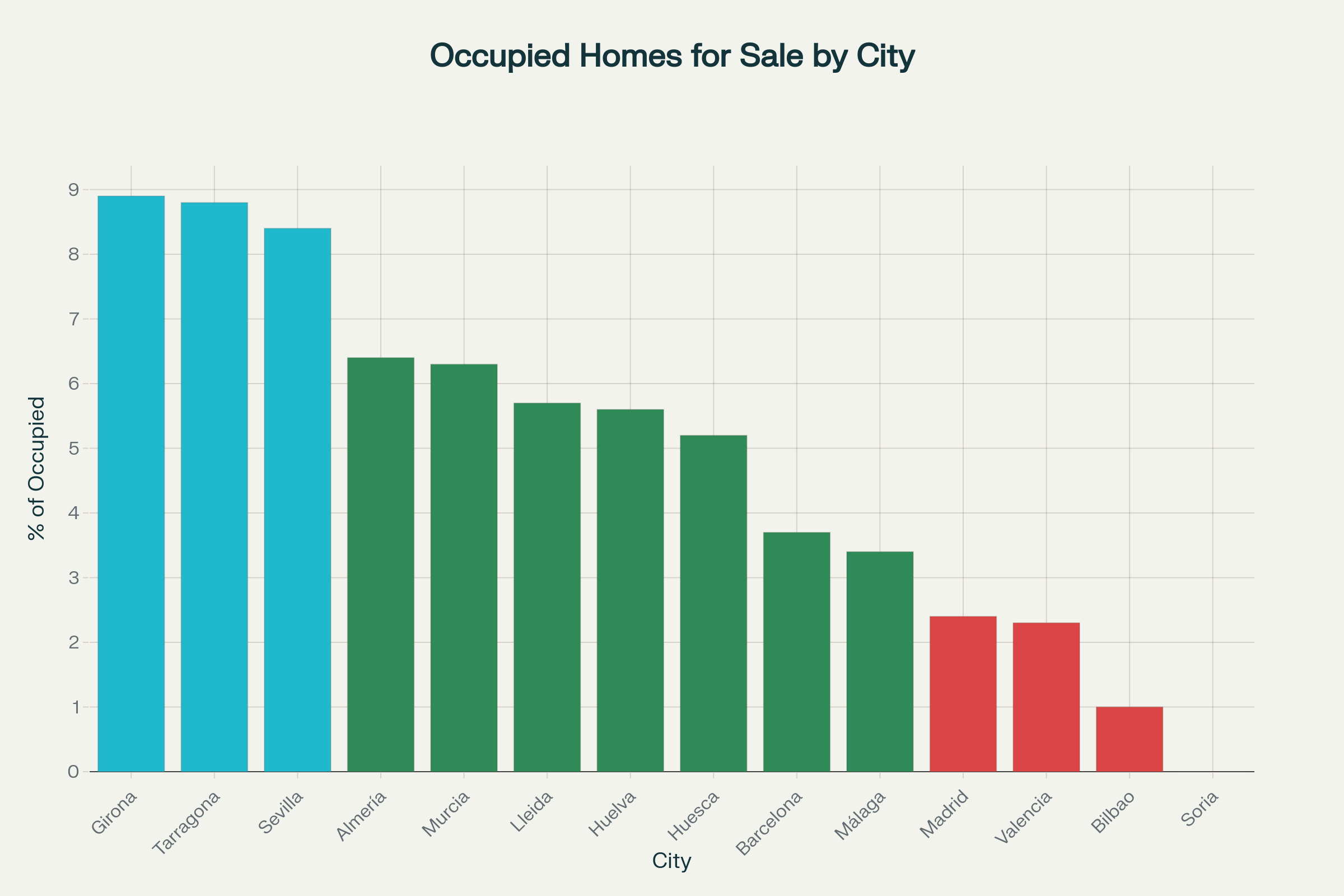
Regional Impact: Catalonia Leads the Numbers
When analyzing the data by province, Barcelona leads the ranking with 6,587 occupied homes for sale, representing 7.9% of the province’s total housing stock. It is followed by Seville (6.6%), Toledo (5.3%), Huelva (5.1%), and Almería (5.1%).
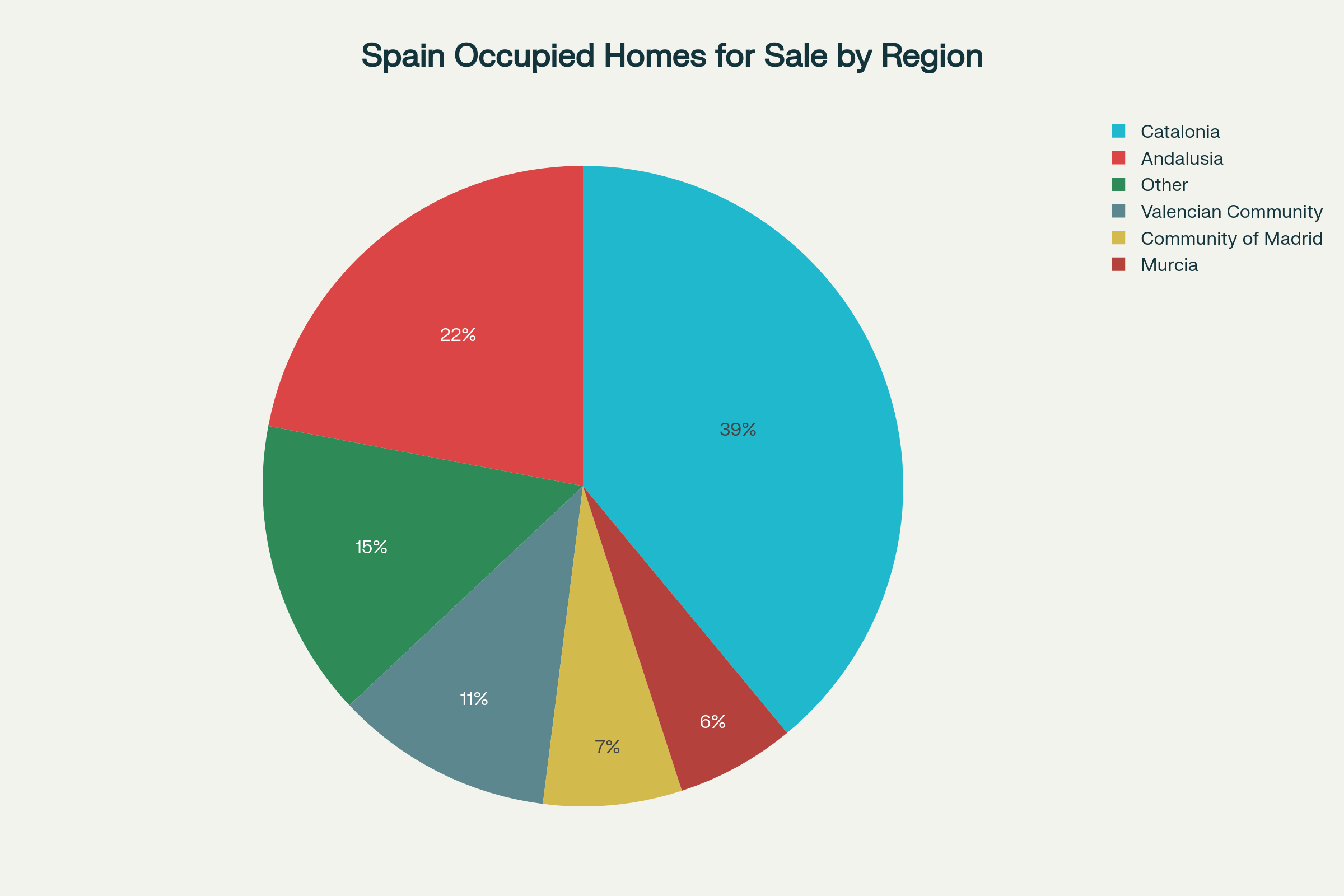
Catalonia alone accounts for 39% of all occupied homes for sale in Spain, followed by Andalusia (22%), the Valencian Community (11%), and the Community of Madrid (7%). Murcia represents around 6% of this market segment.
Why Are Occupied Homes Being Sold?
According to experts from Idealista, many property owners are simply giving up hope. “Despite attempts to downplay the issue, the number of owners who give up waiting for judicial intervention is growing,” he explains. “They often end up selling at half the market price because they feel unprotected and disillusioned with the legal process.”
This highlights a major flaw in Spain’s housing and judicial systems: the lack of legal protection for property owners. The slow eviction process not only discourages property investment but also removes potential rental homes from the market, worsening the housing shortage.
The Legal and Financial Implications
The sale of occupied homes is complex. Buyers typically acquire the property “without possession,” meaning they must assume the responsibility and risk of initiating or completing the eviction process themselves. In many cases, specialized investors purchase these homes at reduced prices, expecting a future return once possession is recovered.
However, for private buyers, this can be a risky move. Without proper legal advice and understanding of Spain’s occupancy laws, buyers could find themselves entangled in lengthy legal battles.
Which Provinces Are Least Affected?
On the other end of the spectrum, several provinces have minimal incidence of occupied property sales. Soria, Ourense, Palencia, Salamanca, and Ávila show rates below 1%. These areas remain relatively unaffected by the phenomenon and continue to offer stable property markets.
How Does This Affect the Real Estate Market?
The growth of occupied homes for sale has broader consequences for Spain’s real estate sector:
- Reduced investor confidence: The perception of legal insecurity discourages both domestic and international buyers.
- Fewer properties for rent: Owners wary of occupation risk often withdraw homes from the rental market.
- Price distortion: The presence of discounted occupied properties can affect average market prices in certain areas.
- Legal uncertainty: Long eviction timelines and inconsistent enforcement contribute to owners’ frustration.
What Can Be Done to Address the Issue?
Experts call for stronger legal reforms to protect property owners and speed up judicial eviction processes. These reforms could include:
- Simplifying eviction procedures for clearly illegal occupations.
- Creating special housing courts or fast-track eviction systems.
- Offering better legal and financial support to affected owners.
- Encouraging insurance products to protect landlords from occupancy risks.
Conclusion
The rise of occupied homes for sale in Spain represents both a symptom and a cause of deeper structural problems in the housing market. While some investors may see opportunity in discounted properties, for many owners it reflects frustration, loss, and lack of legal security.
As Spain’s real estate market evolves, addressing illegal occupation must become a priority—not only to protect homeowners but also to restore confidence and stability in the sector.
FAQ: Occupied Homes for Sale in Spain
1. What does it mean when a property is “occupied” in Spain?
An occupied property—known in Spanish as vivienda okupada—refers to a home that has been taken over without the owner’s consent. This usually occurs when individuals or groups enter an empty property illegally and refuse to leave. While the owner keeps legal ownership, they lose physical control, making it difficult to sell, rent, or recover the property through regular means.
2. Why are there so many occupied homes for sale in Spain?
The number of occupied homes for sale in Spain has increased due to the slow pace of judicial eviction processes and the limited legal protection for property owners. Many homeowners, tired of waiting months or even years for a resolution, decide to sell their properties at heavily discounted prices—sometimes up to 50% below market value—to reduce financial stress and legal uncertainty.
3. How many occupied homes are for sale in Spain in 2025?
According to data from Idealista, as of September 2025, there are 23,010 occupied homes for sale in Spain, accounting for about 3% of all listings nationwide. This figure highlights the growing trend of owners selling their properties while still under illegal occupation, reflecting wider concerns about security and judicial efficiency in the Spanish housing market.
4. Which regions in Spain have the most occupied homes for sale?
The regions most affected by occupied homes for sale are Catalonia, Andalusia, and the Valencian Community.
- Catalonia leads with 39% of all listings, driven mainly by Barcelona, Girona, and Tarragona.
- Andalusia follows with 22%, especially in Seville, Almería, and Huelva.
- Murcia and Madrid also show significant numbers, representing smaller but notable shares of the national total.
5. What cities have the highest percentages of occupied properties?
The highest concentration of occupied homes for sale in Spain is found in:
- Girona (8.9%)
- Tarragona (8.8%)
- Seville (8.4%)
- Almería (6.4%)
- Murcia (6.3%)
These cities illustrate where the problem of property occupation is most pronounced, showing that the issue extends beyond major metropolitan areas into smaller but highly affected markets across Spain.
Get your free step-by-step Spain move plan
10 emails over 2 weeks covering visas, budget, housing & the mistakes to avoid.
Join 10,000+ expats who used this roadmap.
100% free · No credit card · Unsubscribe anytime