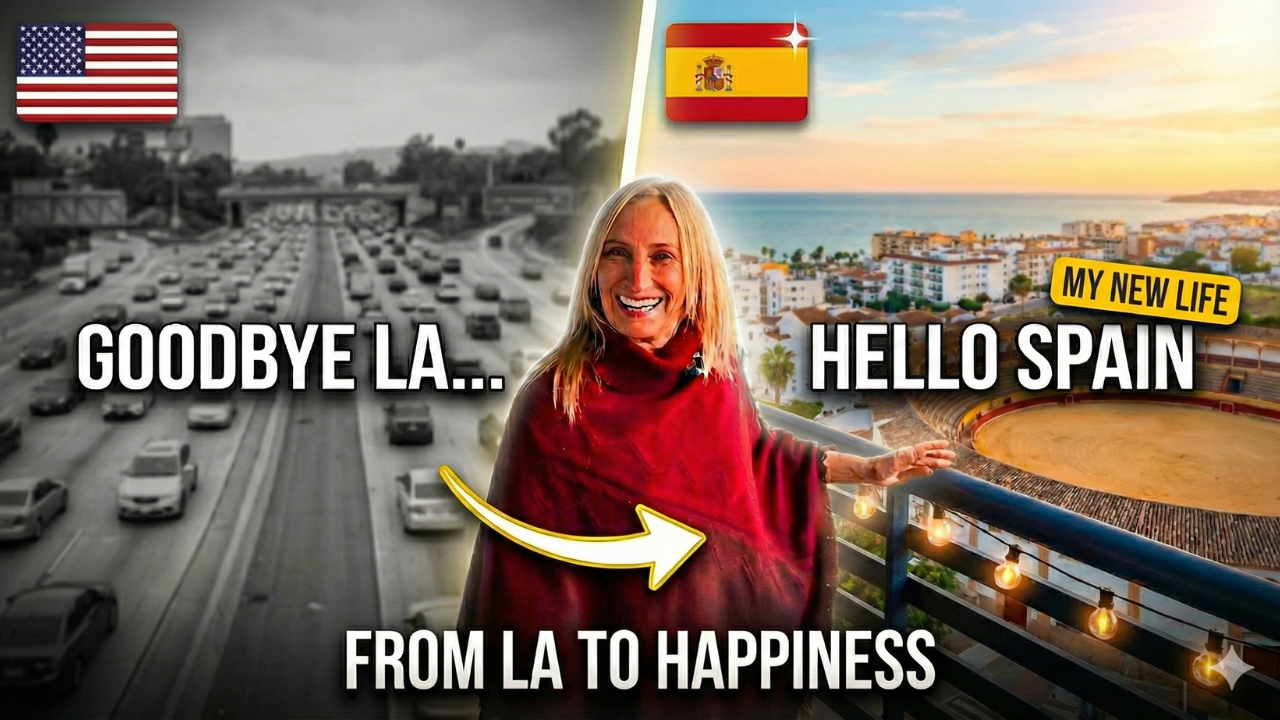
Retiring abroad is a dream shared by many Americans searching for safety, affordability, and a healthier pace of life. But for one 54-year-old woman from Los Angeles—who preferred to remain anonymous—this dream became reality when she relocated to Estepona, a coastal city in southern Spain known for its Mediterranean beauty and growing international community. Her story is not simply about changing geography; it is about rebuilding quality of life, embracing community, and navigating the practical steps required to retire in Spain on the Spain Non Lucrative Visa (NLV).
In this in-depth interview conducted by Bruno Bianchi of Spainguru.es, she shares her full experience—from budgeting to bureaucracy, from cultural adaptation to long-term residency plans. Her insights answer the most common questions Americans have when considering the Spain Non-Lucrative Visa and retiring in Estepona.
Why Estepona? A 20-Year Love Story with Spain
For more than two decades, she visited Estepona regularly. Her first visit was in 2001, when it was still a quiet fishing village. Over the years, she developed close friendships with residents, including her best friend who later settled there permanently.
By 2022—after losing her parents and reassessing her priorities—she realized she no longer felt fulfilled in Los Angeles. The high cost of living, car dependency, and overall stress pushed her to pursue early retirement abroad. The Spain Non-Lucrative Visa became the most realistic pathway.
“I knew this is where I wanted to retire,” she explained. “Life is too short. Spain offered everything I was missing—community, safety, walkability, and a better lifestyle.”
The Spain Non-Lucrative Visa: Preparing for the Move
Many Americans considering retirement in Spain ask the same questions:
- How long does the NLV process take?
- What financial proof is required?
- Do I need private health insurance?
- How do I find housing before arriving?
Her experience answers all of these.
Timeline and Documentation
She began researching in 2022 and submitted her application in May 2023. Because she applied at the Los Angeles consulate—known for stricter documentation requirements—she prepared meticulously.
Key requirements she gathered:
- FBI background check
- Proof of savings and liquid assets
- A bank letter certifying accessible funds
- Private Spanish health insurance with no co-payments
- A housing plan (her friend notarized a letter guaranteeing accommodation)
Her visa took 10 weeks and 2 days to be approved. She emphasized that the application status on the BLS website never updated properly, which caused anxiety—but the approval eventually arrived.
Professional Assistance
Although she believes applicants can complete the NLV alone, she felt more secure using a lawyer recommended by Spainguru and a vetted insurance broker. Her lawyer also arranged her TIE appointment, allowing her to obtain her residency card within two months of arrival.
Budgeting for Retirement in Estepona
One of the biggest concerns for potential NLV applicants is monthly budgeting. She provides a clear and reassuring breakdown.
Housing Costs in Estepona
She rents a two-bedroom apartment with sea views, a shared pool, gym, and garage for €1,500 per month, paid one year upfront—a common requirement when renting in competitive markets as a non-working resident.
Is it difficult to rent with pets?
She says not really. Despite Idealista showing fewer listings for pet owners, she viewed two apartments, and both accepted pets. Estepona is extremely dog-friendly.
Monthly Expense Breakdown
She transfers around €2,000/month, but rarely uses the full amount.
Typical monthly spending:
- Groceries: ~€300
- Dining & social life: €75–€100
- Health insurance: ~€150 (after NLV year-one payment)
- Transportation: €0 (she doesn’t own a car)
- Utilities & misc.: Modest and predictable
Compared to Los Angeles—where she paid $750/month for health insurance and $600/month for groceries—Spain feels dramatically more affordable and less stressful.
She estimates her true monthly living cost in Estepona, excluding rent, is below €1,500.
Life Without a Car: Walkability & Public Transport
One of the biggest lifestyle upgrades for her is the ability to walk everywhere. She is:
- 10–15 minutes from the old town
- Steps away from markets and cafés
- Near the marina and beach
- Within an easy bus ride to Marbella or Málaga
After years of LA traffic, the change is transformative:
“I don’t miss driving at all.”
Building a Social Life in Estepona
A common worry for retirees moving abroad is loneliness. But she experienced the opposite.
How she made friends:
- She already knew locals from past visits
- Joined Spanish classes
- Met people through friends-of-friends
- Socialized in cafés, tapas bars, and local shops
- Attended expat meetups
- Found support in Spainguru’s Facebook communities
Estepona’s mix of British, Spanish, and American residents makes it naturally social. She describes her life now as:
“I have fewer friends than in the U.S., but a much better social life.”
Culture Shocks and Bureaucratic Realities
Although deeply in love with Spain, she acknowledges typical challenges:
Top difficulties:
- Spanish bureaucracy feels slow and unstreamlined.
- Customer service is less service-oriented than in the U.S.
- Challenging to set up banking and mobile services without a TIE.
- Language barriers make medical advocacy difficult.
Most positive cultural differences:
- Safety: “I walk home at midnight without fear.”
- Family-friendly environment
- Strong community life
- Less consumerism and fewer work pressures
- Slower, healthier rhythm: “No pasa mañana.”
Bringing a Pet to Spain on the Non-Lucrative Visa
Transporting her dog was one of the hardest parts of the entire process.
Her breed cannot fly in cargo or in-cabin due to weight and respiratory risk. After losing money on scheduled flights (due to visa uncertainty), she secured a spot on a chartered pet-friendly flight:
- 8 passengers
- 12 dogs
- 3 cats
Expensive—but worth the peace of mind.
Long-Term Plans: Permanent Residency and Spanish Citizenship
She hopes to stay in Spain permanently and is already planning her residency trajectory:
- Year 1–2: Spain Non-Lucrative Visa
- Year 5: Apply for long-term residency
- Year 10: Potentially apply for Spanish citizenship, if fluent enough in Spanish
She is strict about not spending more than 2 months outside Spain per year—a requirement for future permanent residency.
Advice for Americans Applying for the Spain Non-Lucrative Visa
Her recommendations for future applicants:
✔ Open a Spanish online bank account before arrival
It makes SIM cards, utilities, and payments much easier.
✔ Use a credit union in the U.S.
They issue better balance letters and allow foreign addresses.
✔ Understand your consulate’s insurance rules
Some require active policies at the appointment; others upon entry.
✔ Start downsizing early
Minimalism makes the move easier emotionally and logistically.
✔ Prepare for emotional fatigue
Waiting for approval without your passport can be stressful.
✔ Stay engaged in support communities
The Spainguru Facebook group was her “group therapy.”
Her final message to Americans:
“You don’t need to work until 72. A great life exists outside the U.S., and retiring in Spain is more achievable than many think.”
Conclusion
Her journey retiring in Estepona through the Spain Non-Lucrative Visa highlights exactly what many Americans are seeking: affordability, safety, walkability, community, and quality of life. While Spain’s bureaucracy requires patience, the reward is a lifestyle that feels emotionally, financially, and socially richer than what she left behind.
Her story demonstrates that retiring in Spain is not an unreachable dream—it is a structured, achievable pathway for those prepared to plan ahead and embrace a slower, more fulfilling pace of life.
Disclaimer
This article is based on the contributions and experiences of Spainguru community members and is no legal advice. Consider consulting a legal expert for personalized guidance.