Thinking about moving to Spain? One of the most important steps in your planning process is building a realistic, customized budget. Whether you’re relocating as a single professional, a couple seeking retirement, or a family with kids, your monthly expenses in Spain will vary depending on lifestyle, location, and housing situation.
This guide will walk you through the key cost categories you should consider, show you how to research local prices, and give you tools to estimate your monthly and annual budget.
Watch the Video: Can You Live in Spain with $2,000 per Month?
This video by Spainguru breaks down different real-life budget scenarios for living in Spain, including ownership with and without a mortgage, and renting. It’s the perfect starting point before diving into the numbers.
Download and Use the Free Budget Template
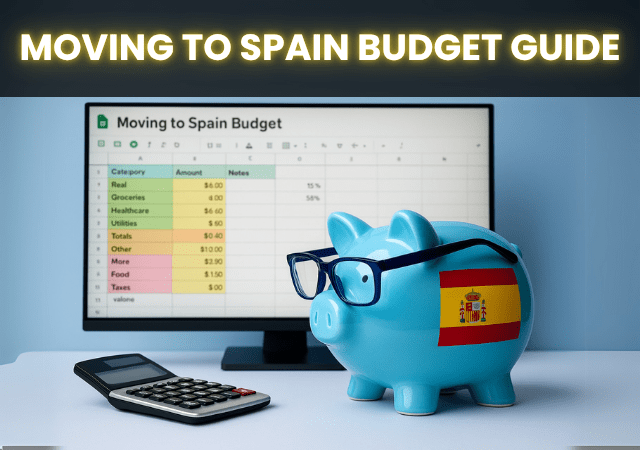
To make budgeting easier, we’ve created a free public Google Sheet you can use to estimate your personal monthly and annual expenses based on your situation.
The spreadsheet includes:
- A full list of budget categories
- Separate columns for estimated monthly costs
- A services tab with vetted visa-related providers
- A disclaimer and notes tab
Make a copy to your own Google Drive to customize it.
Core Budget Categories You Should Include
Your cost of living in Spain depends largely on these main factors:
Housing
- Rent or mortgage
- Property tax (IBI)
- Home insurance
- Community fees (HOA)
- Home maintenance or repairs
Utilities
- Electricity
- Water
- Gas (natural or bottled)
- Internet and mobile phone
- Cable or streaming services
Food and Groceries
- Supermarket expenses
- Dining out or takeout
- Personal care and household products
Transportation
- Public transport (bus, metro, train)
- Car ownership costs (insurance, fuel, maintenance)
- Taxis or rideshares
Healthcare
- Private health insurance (required for most visa applicants)
- Dental, vision, and out-of-pocket medical expenses
Education and Childcare (if applicable)
- Tuition, books, uniforms
- Daycare or after-school care
- Extracurricular activities
Lifestyle and Leisure
- Gym or sports club memberships
- Travel and weekend getaways
- Entertainment and hobbies
- Clothing, gifts, and personal services
Legal and Administrative
- Visa fees
- Sworn translations
- Apostilles
- Medical certificate
- Notary or gestor fees
One-Time Setup Costs
- Flight and moving costs
- Deposits and furniture
- Initial legal and visa application fees
How Costs Vary in Spain
The biggest variations in cost come from your housing situation and your chosen location.
Rent vs. Mortgage
Renting in cities like Barcelona or Madrid can cost 50 to 70 percent more than in mid-sized cities like Valencia, Malaga, or Alicante. Owning a property mortgage-free significantly reduces monthly outgoings.
Urban vs. Rural Areas
Living in a small inland town can be considerably cheaper than life in a major metropolitan area. For example, a one-bedroom flat in Granada might cost €500, while a similar property in Madrid could easily be over €1,200.
Lifestyle Choices
Dining out often, international schools, imported products, and private transportation will increase your budget. Simpler living with local goods and public transit keeps costs low.
Use Numbeo to Get Real-Time Local Prices
To fill in realistic values in your budget sheet, we recommend using Numbeo. It’s a free resource that provides average prices for groceries, rent, transport, restaurants, and more in Spanish cities.
You can search by city (e.g., “Barcelona” or “Valencia”) and compare prices to where you live now. It’s especially helpful for estimating costs like:
- A meal at a local restaurant
- Monthly public transport pass
- Rent for a one- or two-bedroom flat
- Grocery staples like milk, bread, meat, and produce
Tailor the Budget to Your Profile
Use the Google Sheet to build different scenarios, such as:
- Single person renting a one-bedroom apartment
- Couple owning a home with a mortgage
- Family of four living in a suburb near a major city
The sheet helps you see what categories impact your budget the most, such as rent, health insurance, or schooling.
If you’re early in the planning phase, start with average estimates and adjust over time as you research your options more deeply or take exploratory trips to Spain.
Recommended Services to Help You Prepare
On the second tab of the spreadsheet, you’ll find vetted services Spainguru recommends for those thinking of moving to Spain.
These services are trusted by Spainguru and frequently used by members of our expat community.
Final Thoughts
Creating a realistic, personalized budget is one of the smartest steps you can take when planning your move to Spain. It gives you clarity, reduces stress, and helps you avoid surprises.
By watching the video, using the public spreadsheet, and researching real-time prices on Numbeo, you’ll be equipped to create a budget that matches your goals and lifestyle.
Disclaimer
This article and the linked budget spreadsheet are provided for informational purposes only. The figures, tools, and services mentioned are based on community contributions and third-party sources. They do not constitute financial, legal, or immigration advice.
Actual costs may vary significantly based on your location, family size, visa type, and lifestyle. Please consult qualified professionals for personalized advice.