Question
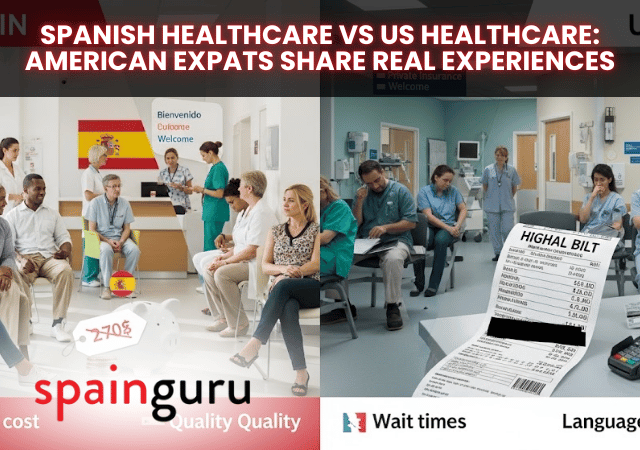
Me and my family are considering moving to Spain from California. We would like to know how does the overall Spanish Healthcare quality vs the US Healthcare. We have a good feel of the cost differences. But wonder about the quality of Doctors, Hospitals and the entire system.
For example, Does language barrier make it an issue? Does anyone prefer to have an insurance through US for future rare and complex situations? Thanks
Answers
These are the answers from Spain Immigration and Residency Questions – SpainGuru.es members:
“It’s pretty good but you might spend a long time on waiting lists for special cases.”
“If you are using public, yes. Private too — not as long as public but a month or two. Or more.”
“Depending on your health insurance, if you call and get a list of providers, it’s usually 2–3 pages long. Call around and I bet you’ll find at least one with an appointment within 3 weeks. In the U.S. I would always wait 2–3 months.”
“In the U.S., waiting for specialists is also common. I’m an RN in a surgical center and I know you wait a long time and possibly pay a lot of money. In USA to see a specialist 3 to 6 months.”
“I had longer wait times in US on private insurance. My primary care doctor was always 3–4 months out, dermatology over a year, rheumatologist 6+ months, GI doctor 9 months. Only options were urgent care or ER.”

“In the US, it took me 9 months to see a hip doctor, almost a year to see an otolaryngologist, over a year for the weight loss clinic, and 5 months to see an ophthalmologist — with full care coverage.”
“It’s the same in the US, but with a big bill at the end. I once waited 8 months for a dermatologist, my son is currently on a 6-month wait for endocrinologist.”
“The medical services are great in Spain. Assume doctors speak only Spanish unless in an expat-heavy area. In Valencia most professionals speak some English, but in smaller towns they may not. You don’t want to use pigeon Spanish in the ER.”
“Inexpensive. Efficient. Likely English-speaking doctors in bigger cities. For most visas you’ll need private health insurance, meaning you’ll use private hospitals that cater to expats and mostly speak English.”
“American who moved from California with 3 kids — it’s so much better. No copays, no long approval processes for MRIs, no deductibles. Partner doesn’t speak Spanish but manages fine in big cities.”
“Private insurance here doesn’t nickel and dime or deny coverage like in the US. Big cities have better facilities. You need to be proactive about your health.”
“WHO data shows Spain’s care exceeds USA overall. But learning the system can be frustrating. Care is uneven in the US due to insurance — top hospitals are world-class, but not accessible to all.”
Here you can find Spainguru’s recommended private health insurance policies, compliant with Spanish visas and residencies.
“After a year in Spain you can buy into the universal system where many doctors speak English. Care is much better here than in the US.”
“My healthcare in the USA was spectacularly good, but I had great insurance. My care in Spain is good too, cheaper but not better. Still, the Spanish system is more morally grounded.”
“The system here is great. Doctors are knowledgeable. Private is much more affordable than US and excellent.”
“We’re on public healthcare in Spain and medical care has been superb. In Spain, families are expected to stay with loved ones in hospital to assist.”
“Check your insurance coverage — our policy didn’t cover ICU, and we paid €28,000 out of pocket. Also, 112 ambulance service is not for private insurance.”
“Spanish healthcare is better for everyday needs. Best care for serious issues is in the public system, which requires paying into Social Security. Private care is faster for appointments. For serious conditions, high-level Spanish is essential to fully understand and manage care.”

“With private insurance like Sanitas or Adeslas, you can filter doctors by language. Costs can be very low — e.g., $60/month for full coverage with mental health services.”
“My late wife had stage IV cancer treated in Málaga. Care matched top US ‘platinum’ standards, with no billing issues and compassionate treatment.”
“US has top doctors and hospitals, but Spain’s life expectancy is higher. Rich Spaniards sometimes travel abroad for care, but overall the public system here is excellent.”
“I had a TIA and received excellent care in Spain. Translator was provided, but privacy standards differ from US. No WiFi in hospital, shared rooms.”
“In Spain, doctors can focus on care without insurance interference. Medication is low-priced or free. But the public system is essential for serious conditions.”
“In the US I had more structured annual checkups and screenings. In Spain, tests are available but not systematic. Language and bedside manner can differ. US healthcare can be better if you have top insurance; Spain is better if you don’t.”
Conclusion
From the experiences shared, Spanish healthcare offers high-quality medical services at significantly lower costs than in the US, especially for those without premium US insurance. Public healthcare in Spain is robust but can involve long wait times for specialists, while private insurance offers faster access and more English-speaking providers.
However, some expats note that the US can still provide more systematic preventive care and faster specialist access for those with excellent insurance coverage. Language skills are important in Spain, especially for complex medical situations, though large cities and private hospitals often have English-speaking doctors.
Overall, the choice between Spanish healthcare and US healthcare often comes down to insurance quality, location, and personal needs. Many expats find Spain’s system fairer, more affordable, and less stressful, making it a strong option for those relocating from the US. This article is based on personal opinions from the Spainguru community and is not legal advice.
| Aspect | Spanish Healthcare | US Healthcare |
|---|---|---|
| Cost | Significantly lower costs; public system often free for contributors; private affordable compared to US | Extremely high costs, even with insurance; risk of medical bankruptcy |
| Access to Specialists | Public system requires referrals; private allows direct access | Direct access with many plans; depends on insurance type |
| Wait Times (Specialists) | Public: months; Private: usually weeks | Can also be months; sometimes faster for top insurance holders |
| Preventive Care | Less systematic; patient must be proactive | Highly systematic with annual check-ups and screenings |
| Language Barriers | English more common in big cities/private hospitals; Spanish needed for complex cases | No language barrier for English speakers |
| Public vs Private | Public: universal for contributors; Private: faster appointments | Public options limited (Medicare/Medicaid); private dominant |
| Insurance Requirements for Expats | Most visas require private insurance; DNV/autónomo may access public | Private insurance essential; Medicare for seniors |
| Billing & Admin Hassle | Minimal bureaucracy; no surprise bills | High admin burden; billing disputes common |
| Prescription Costs | Very low (e.g., €0.41 for 100 thyroid pills) | Variable; often much higher than Spain |
| Quality of Care | High quality overall; public excels in complex cases; private good for speed | Top hospitals and specialists available for those who can afford |
| Hospital Experience | Shared rooms common; families assist with care; less emphasis on privacy | Private rooms more common; higher privacy standards |
| Life Expectancy | Second-highest life expectancy globally | Lower life expectancy compared to Spain |